
UNIOSUN Logo
×
FACULTY OF ENGINEERING

Engineering
Sustainable Solutions.

Empowering the next generation of innovators through rigorous technical training, advanced research, and hands-on fabrication across seven core engineering disciplines.

Core Disciplines:

AgriculturalChemicalCivilElectrical/ElectronicsMechanicalComputerMechatronics
Hardware
Infrastructure
Automation
Energy

Advancing Scientific Knowledge, Driving Innovation

The Faculty of Basic and Applied Sciences at Osun State University is a vibrant community of scholars dedicated to advancing scientific knowledge, fostering innovation, and producing graduates equipped with analytical skills, research competence, and practical expertise for global relevance.

Our interdisciplinary approach combines theoretical rigor with hands-on laboratory experience, preparing students for impactful careers in research institutions, industries, academia, and government agencies.

Mission

To produce scientifically literate graduates with strong analytical skills, research competence, and practical expertise who can contribute to national development and global scientific advancement.

Vision

To be a centre of excellence in basic and applied sciences education and research, recognized globally for producing innovative scientists and problem-solvers.

Our Departments

Twelve distinguished departments offering B.Sc. programmes with full NUC accreditation

Biochemistry

Molecular biology, enzymology, metabolic pathways

Biotechnology

Genetic engineering, bioinformatics, bioprocess

Geology

Mineralogy, petrology, geophysics, exploration

Industrial Chemistry

Chemical synthesis, polymer science, analysis

Microbiology

Bacteriology, virology, mycology, immunology

Mathematics

Pure math, applied math, mathematical modeling

Statistics

Data analysis, probability, statistical modeling

Physics with Electronics

Quantum mechanics, electronics, photonics

Plant Biology

Botany, plant physiology, ecology

Animal & Environmental Biology

Zoology, ecology, conservation biology

Science Laboratory Technology

Lab management, analytical techniques

Pure and Applied Chemistry

Organic, inorganic, physical chemistry

Programme Philosophy

The Faculty of Basic and Applied Sciences is built on the philosophy that scientific inquiry and technological innovation are essential for national development. Our programmes integrate theoretical knowledge with practical laboratory experience, critical analysis with hands-on experimentation, and local relevance with global scientific standards.

Core Objectives

  • Develop strong analytical and problem-solving skills for scientific inquiry
  • Train students in modern laboratory techniques and research methods
  • Prepare graduates for careers in research, industry, and academia
  • Foster innovation and entrepreneurship in scientific fields
  • Promote interdisciplinary collaboration and scientific communication

Career Opportunities

Graduates of Basic and Applied Sciences are prepared for diverse professional paths

Research Scientist

Laboratories & Research Institutes

Industrial Chemist

Manufacturing & Production

Biotechnologist

Pharmaceutical & Agriculture

Academician

Universities & Colleges

Microbiologist

Healthcare & Food Industry

Data Scientist

Tech & Analytics

Geologist

Mining & Oil Exploration

Physicist

Research & Technology

Research Areas

Our faculty engages in cutting-edge research across multiple scientific disciplines

Molecular Biology

Environmental Science

Materials Chemistry

Data Analytics

Renewable Energy

Mineral Exploration

Industrial Microbiology

Mathematical Modeling

Admission Requirements

Multiple entry pathways for qualified candidates

5 Credit passes in SSCE or equivalent including English Language, Mathematics, and relevant Science subjects (Physics, Chemistry, Biology) in not more than two sittings. Acceptable UTME score and Post-UTME screening required.

Advanced Level passes in at least two relevant Science subjects. ND/NCE with Lower Credit in relevant fields or acceptable UNIOSUN Foundation Programme pass also accepted.

Programme Duration

4 years minimum (UTME)
3 years minimum (Direct Entry)

Graduation Requirements

Complete all prescribed courses
Meet minimum CGPA requirement

NUC Status

Full Accreditation
BMAS Compliant Curriculum

Registration Procedure

  • Complete registration at semester start
  • Course changes require coordinator consent
  • Withdrawal allowed before 1/3 of lectures
  • Late registration penalty up to 4 weeks

Our Engineering Departments

The Faculty of Engineering at Osun State University, Osogbo Campus comprises seven (7) accredited departments offering B.Eng., M.Sc., and Ph.D. programmes in Agricultural Engineering, Chemical Engineering, Civil Engineering, Computer Engineering, Electrical/Electronics Engineering, Mechanical Engineering, and Mechatronics Engineering. All programmes are fully accredited by the National Universities Commission (NUC) and the Council for the Regulation of Engineering in Nigeria (COREN).
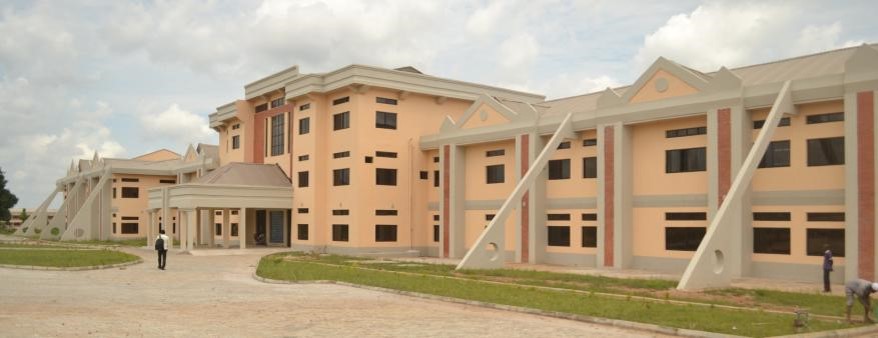
Agricultural Engineering Department AGE

Farm machinery design, post-harvest technology, irrigation systems, soil and water conservation, agricultural structures, and renewable energy from biomass.

Farm Machinery Irrigation Systems Post-Harvest Tech
Chemical Engineering Department CHE

Process design, reaction engineering, thermodynamics, transport phenomena, petrochemicals, and sustainable energy systems.

Process Design Petrochemicals Sustainable Energy
Explore Department
Civil Engineering Department CIE

Structural analysis, geotechnical engineering, transportation systems, water resources, construction management, and environmental engineering.

Structural Design Geotechnical Transportation
Explore Department
Computer Engineering Department CEN

Embedded systems, computer architecture, microprocessors, digital logic design, IoT, robotics, and hardware-software integration.

Embedded Systems IoT Computer Architecture
Explore Department
Electrical/Electronics Engineering Department EEE

Power systems, control engineering, telecommunications, signal processing, renewable energy, circuit design, and instrumentation.

Power Systems Telecommunications Renewable Energy
Explore Department
Mechanical Engineering Department MEE

Thermodynamics, fluid mechanics, machine design, manufacturing processes, automotive engineering, robotics, and materials science.

Thermofluids Machine Design Manufacturing
Explore Department
Mechatronics Engineering Department MTR

Robotics, automation, control systems, sensors and actuators, artificial intelligence integration, and intelligent systems design.

Robotics Industrial Automation Control Systems
Explore Department