What We Stand For
The department exists to train students who can understand, manage, and improve aquatic resources for sustainable productivity and societal benefit, while responding to changing environmental and economic realities.
Location
Located in the Faculty of Renewable Natural Resources Management, College of Agriculture, Ejigbo, Osun State.
Department History
The programme began under Animal Science and Fisheries, later evolved through Fisheries and Wildlife Management, and became part of the Faculty of Renewable Natural Resources Management in 2019.
2007
First set of students admitted
2012
First Bachelor graduates produced
3+
Core academic pathways including B.Sc., M.Sc. and Ph.D.
Research
Strong focus on fisheries, aquaculture, water quality and fish nutrition
Our Mission
To create a centre of excellence in Fisheries and Aquatic Resources Management through quality teaching, practical learning, innovation, entrepreneurship, and globally competitive training.
Our Vision
To be an exemplary department known for high-quality teaching, learning, research, and the production of scholars and professionals with meaningful impact in their environment and beyond.

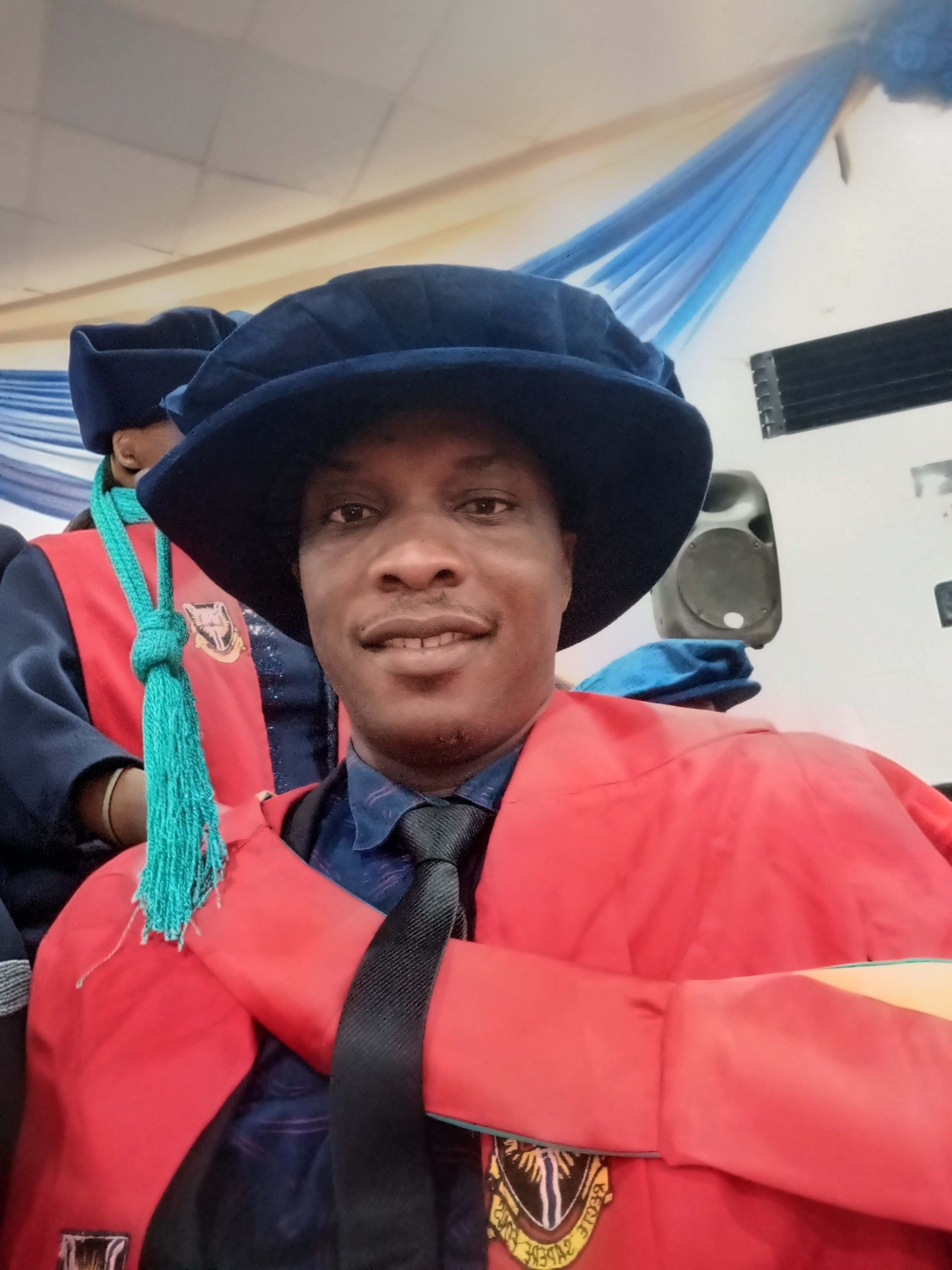
Head, Department of Fisheries and Aquatic Resources Management
AKANMU Olumuyiwa A.
Senior Lecturer
COLLEGE OF AGRICULTURE • FISHERIES & AQUATIC RES. MGT
Programmes Designed for Academic and Professional Growth
The department offers undergraduate and postgraduate study options that equip students for careers, research, leadership, and advanced practice in fisheries and aquatic resources management.
B.Sc. Fisheries and Aquaculture
An undergraduate programme designed to produce competent graduates with practical and professional capacity in fisheries and aquaculture.
M.Sc. Fisheries and Aquatic Resources Management
Postgraduate training with options in Fisheries Management and Aquaculture.
Ph.D. Fisheries and Aquatic Resources Management
Advanced doctoral study with specialisation options in Fisheries Management and Aquaculture.
A Department Built Around Practical Learning and Relevance
Laboratory Support
Access to functional laboratories and teaching spaces that support practical learning and research.
Aquaculture Facilities
Exposure to fish breeding, nutrition, hatchery systems, aquaria, fish processing, and production systems.
Water Quality & Monitoring
Training in water quality monitoring and aquatic environmental assessment.
Industrial Experience
Structured practical year experience and SIWES placement in relevant agencies and establishments.
Entrepreneurial Culture
Students are prepared for self-reliance, innovation, communication, and problem-solving.
Professional Linkages
Connections with professional bodies and academic collaborations within and outside Nigeria.
Research That Supports Innovation and Sustainable Aquatic Development
The department engages in both basic and applied research across key areas of fisheries and aquaculture, contributing to practical solutions, policy relevance, and industry growth.
Fish Nutrition
Fish Ecology
Toxicology & Water Pollution
Fish Preservation & Value Addition
Ornamental Fish Production
Integrated Fish Production
Grant and Research Recognition
Members of the department have secured notable research support including institutional research funding, TetFund support, and National Research Fund grants, including work on processed insects as protein supplements in fish diets.
Infrastructure That Supports Effective Teaching, Research and Practice
Physical Development
The broader college environment continues to benefit from infrastructure development including roads, health centre, classroom complex, ICT centre, library, laboratories, sports facilities, farm structures, feed mill factory, and fisheries and aquaculture complex support.
Extending Knowledge Beyond the Classroom
The department contributes to community empowerment by sensitising fish farmers on improved production, alternative feed development, fish value addition, and better profitability.
Through its engagement with professional and organic agriculture groups, the department helps bridge research outcomes with field practice and industry improvement.
Farmer Sensitisation
Supporting fish farmers with better production practices and feed options.
Knowledge Sharing
Research findings are discussed with practitioners through professional interaction and outreach.